
What Makes Northeast Ohio a Surprising Source of World-Class Antiques
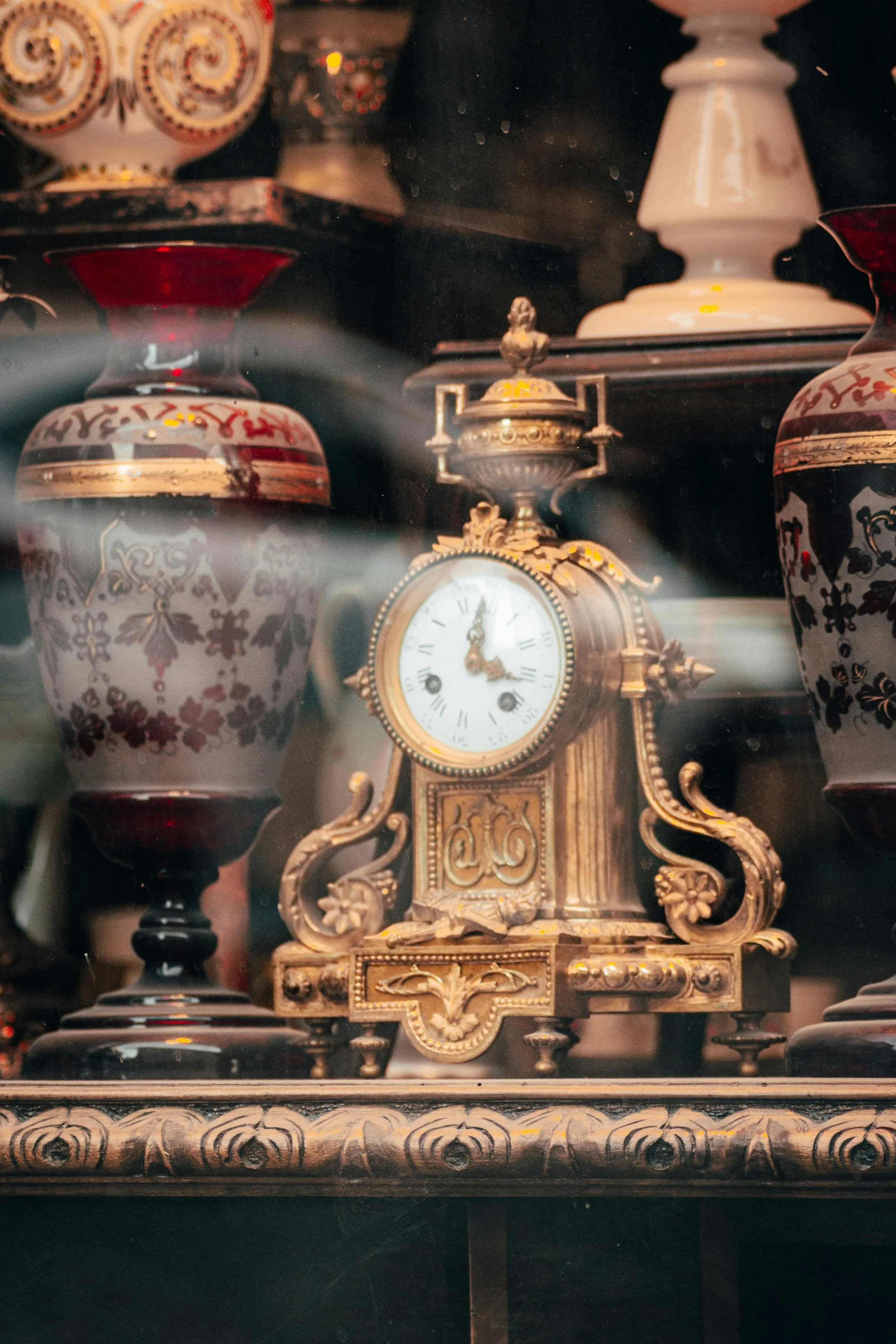
If you were guessing where significant antiques tend to gather, Ohio might not immediately come to mind. And yet, Northeast Ohio in particular has quietly become one of the most reliable sources of high-quality estate material in the country. Not because of a single collecting institution or a famous export market, but because all of that has combined with something slower, more layered, and harder to replicate: wealth, timing, and the habit of holding onto things.
Industrial Wealth That Didn’t Disperse
Cities like Cleveland, Akron, and Youngstown built enormous fortunes during the late 19th and early 20th centuries. Steel, rubber, manufacturing, and shipping created not just wealth, but stability. Families established themselves quickly, built substantial homes, and began collecting in ways that mirrored older East Coast traditions.
According to research and exhibitions from the Cleveland Institute of Art, industrial success in the region didn’t just fund infrastructure; it funded taste. European travel became common among wealthy families, and with it came paintings, furniture, decorative arts, and books that were purchased abroad and brought back to Ohio. The key difference is what happened next.
In larger coastal cities, collections tend to circulate quickly. In Northeast Ohio, they stayed put. Homes in Shaker Heights, Hunting Valley, and near University Circle became long-term repositories, often preserving entire interiors for decades. That stillness is part of what makes the region unusual and so successful.
Collector Families and Quiet Legacy
Northeast Ohio has always produced very particular kinds of collectors. Those who are deeply, persistently committed to finding fascinating things and living with them for decades. And when we’re lucky, those collections pass through Gray’s doors and remind everyone that the Midwest has been hiding serious treasures in plain sight.
Take the Toby Devan Lewis collection featured in Brilliant Baubles. Lewis, the celebrated philanthropist and collector, assembled extraordinary jewelry and gemstones with the eye of someone who understands that restraint is not the point. The auction moved effortlessly from elegant diamonds to dazzling statement pieces.
Then there was Ronald J. DiCenzo’s collection of Asian decorative arts. Over decades, DiCenzo assembled scholar objects, ceramics, carvings, and furniture with incredible patience and specificity. The collection felt like a lifelong conversation with craftsmanship, history, and detail (often how the best collections begin).
And Northeast Ohio collecting has always had room for wonderfully specific obsessions. John A. Davidson Jr.’s collection brought together scientific instruments, rare books, maps, cameras, and textile machinery, making you realize that curiosity itself was the organizing principle. Geological surveys, beside antique cameras, beside knitting machinery, beside classic science fiction. A collection built for the love of what’s inside it.
That range is part of what makes the region special. Northeast Ohio collectors rarely stop at one category. They follow interests wherever they lead, accumulate deeply rather than quickly, and preserve entire worlds in the process. Eventually, those collections resurface. And when they do, they arrive layered, personal, and far more interesting than anyone expected.
Why Auctions of Important Estates in Ohio Matter
It’s not just the quality of the collections that makes them interesting, but how long many of them remained private. For decades, extraordinary objects quietly lived in homes, libraries, and offices without much public attention. Then the estate transitions, collections disperse, and suddenly an auction catalog starts to read like someone has opened a particularly well-traveled attic.
That’s part of why auctions in the region can feel unexpectedly global. One sale may contain modernist paintings, scientific instruments, rare exploration narratives, mid-century jewelry, and highly specific objects nobody under the age of 45 immediately recognizes, but that everyone suddenly wants. At Gray’s, these moments happen regularly because the collecting culture here has always been broad, personal, and just a little obsessive.
A piece by Picasso, appearing alongside regional American paintings. Rare scientific works like Benjamin Franklin’s Experiments and Observations on Electricity emerge from shelves where they sat quietly for generations. Sculptural jewelry by designers like Abel Zimmerman and John Paul Miller reappear after decades, tucked carefully into family collections, still modern and wearable.
And often, the most compelling part is not the price or the rarity, it’s the glimpse into the person who assembled the collection in the first place. Collections reveal patterns. Interests. Lifelong fixations. Entire personalities are organized onto shelves.
Northeast Ohio simply seems unusually good at producing people who fall deeply down fascinating rabbit holes and stay there for forty years. Eventually, those collections re-enter the world. Auctions become the meeting point between one person’s lifelong curiosity and someone else’s next obsession.
Where To Look
There’s a certain expectation that valuable antiques announce themselves. That they sit under good lighting, properly labeled, waiting to be noticed. That does happen, but not every time.
In Northeast Ohio, finding something worthwhile usually involves a bit of overlap between intention and accident. The region offers several distinct paths, each with its own rhythm and level of unpredictability.
Antique malls are perhaps the most deceptively dense. Rows of booths, each curated by a different vendor, create a layered inventory where refinement and randomness sit side by side. You might pass three glass cases of costume jewelry before noticing something tucked slightly out of place. It’s a space that rewards patience more than expertise.
Estate sales operate differently. They are time-sensitive, often emotional, and occasionally chaotic. These are homes being opened, sometimes for the first time in decades, with contents that haven’t yet been filtered for the market. The appeal is immediacy. The risk is that you have to make decisions quickly, often without full context. Still, this is where untouched groupings and long-held objects tend to appear.
Auction houses, like Gray's Auctioneers, sit somewhere between discovery and structure, with added visibility. By the time objects appear in a catalogue , they’ve been evaluated, photographed, and given enough context to make sense of them without entirely removing their mystery. But unlike a traditional room sale, the audience isn’t limited to who shows up. The same object that once sat quietly in a Cleveland mansionis now seen, considered, and bid on from anywhere in the world.
Each of these paths reflects a different stage in the life of an object, from private ownership to public sale, from overlooked to reconsidered. And in Northeast Ohio, they tend to overlap more than you’d expect, which is all part of the appeal.
Where the Treasure Hunting Still Happens
Gray's Auctioneers: Gray’s operates as both a regional anchor and an international gateway. Consignments range from fine art and rare books to stunning jewelry and art. Our expertise allows objects to reach beyond Northeast Ohio into a global collector market, and for sellers, reach matters. For buyers, it means the catalogue is rarely predictable and always worth a look.
Antiques & Uniques: This multi-vendor marketplace leans into variety. Booths shift, inventory rotates, and the experience rewards patience. It’s the kind of place where overlooked objects reveal themselves after a second pass.
Hartville Marketplace & Flea Market: Expansive and seasonal, Hartville blends traditional antiques with regional finds and unexpected curiosities. It carries the energy of a place where not everything has been fully sorted, which is where interesting happens.
Medina Antique Mall: Dense and layered, this mall rewards time. Furniture, glass, paper, and decorative objects are packed closely enough that browsing becomes a kind of slow excavation.
Attenson's Antiques: More traditional in presentation, with an emphasis on furniture and classic forms. Pieces here tend to feel settled, as though they’ve lived several lives before arriving.
The Bomb Shelter: Focused on mid-century and industrial design, this space leans bold. Large-scale objects, statement pieces, and design-forward inventory dominate, offering a different angle on what “collectible” can mean.
What all of this adds up to is a region where the search still feels active. Not picked over, not overly polished. Just layered. You can move from a crowded antique mall to a quiet estate sale to a well-run auction and still feel like you’re seeing different versions of the same story unfold. Objects shift context, gain clarity, and the journey repeats. You’re not just finding items; you’re catching them mid-journey.
The Ongoing Appeal of Northeast Ohio Antiques
Northeast Ohio continues to produce antiques that are unexpected, only because they’ve remained out of view for so long. Collections are still being uncovered, estates are still being sorted, and the combination of industrial history, generational ownership, and regional loyalty continues to shape what enters the market.
It’s one of the more reliable places to find objects that carry both quality and story, even as it flies under the radar.
Interested in finding treasures of your own? Explore upcoming auctions and consignments at Gray’s today. Who knows when your next statement piece will pass through the catalogue.